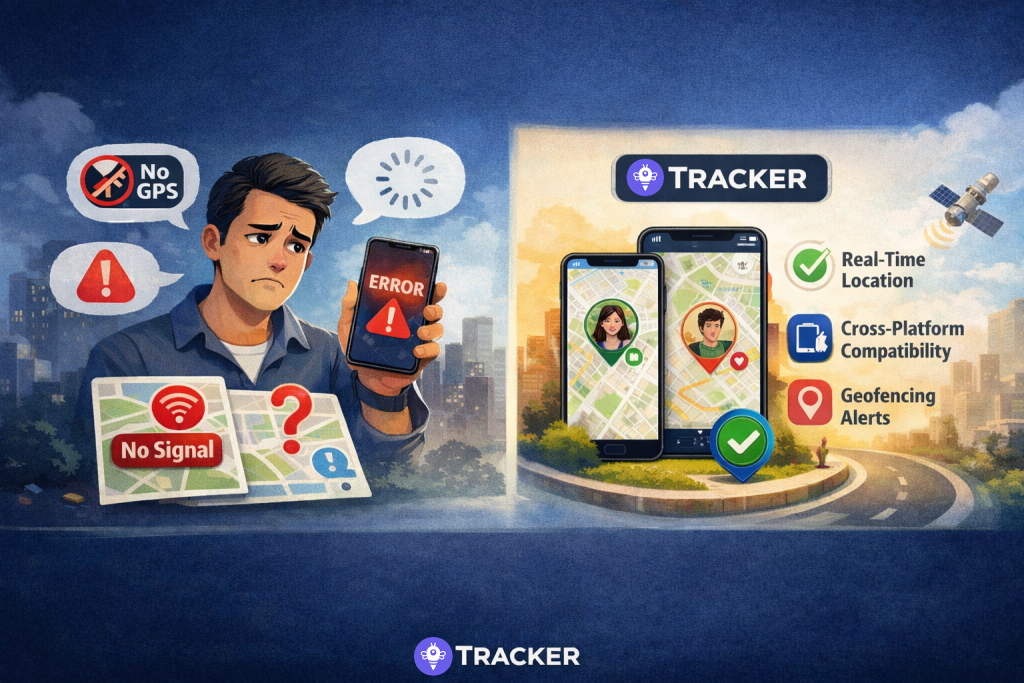
Picture this: It’s 6 PM on a Thursday. Your teenager’s Android phone shows they left basketball practice 30 minutes ago, but they’re not home yet. Your spouse with their iPhone wants to check the location, but Apple’s Find My can’t see Android devices. You’re stuck texting “Where are you?” and waiting anxiously for a response that might never come if their battery died.
This isn’t just inconvenient—it’s a daily reality for many families split between the green and blue bubble divide.
The frustrating truth is that tech giants have built walls around their ecosystems, leaving families to figure out their own cross-platform GPS tracking solutions for staying connected across different platforms.
The Real Cost of Platform Incompatibility
Let’s address the elephant in the room: mixing iPhones and Androids in one family creates genuine safety gaps. When your elderly parent uses an Android find my feature while you’re on iPhone, or when siblings have different devices, traditional tracking methods fail spectacularly.
Why “Just Switch Everyone to iPhone” Isn’t the Answer
The average family of four would need to spend $3,000+ to standardize on iPhones. Even if budget wasn’t an issue, forcing tech preferences on family members breeds resentment. Your tech-savvy teenager might genuinely prefer Android’s customization, while grandma finds iPhone’s simplicity appealing.
Families typically cobble together multiple solutions—WhatsApp location sharing here, Google Maps there, maybe a questionable free app. Each requires separate logins, different interfaces, and most drain battery faster than streaming video. Nobody uses them consistently, defeating the entire purpose.
The Hidden Dangers of Free Tracking Apps
When families search for how to track Android phone for free, they often stumble upon apps that seem perfect—until you read the fine print. A 2023 study found that 73% of free location apps sell user data to advertisers. Your family’s routines and movement patterns become products sold to the highest bidder.
Many of these apps lack basic security. No encryption means hackers can potentially access your family coordination data and real-time locations. That “free” app suddenly becomes very expensive when privacy is compromised.
Breaking Down the Technical Barriers
Understanding why can iPhone track Android phone has been so difficult helps explain why modern solutions are revolutionary. The challenge isn’t just technical—it’s philosophical.
Apple vs. Google: A Tale of Two Ecosystems
Apple built its walls deliberately. Their Find My network uses proprietary protocols that Android devices literally cannot access. Meanwhile, Google’s location services work across platforms but lack the refined iPhone and Android compatibility that users expect.
Consider this scenario: Mom wants to know if Dad picked up their daughter from soccer practice. With native solutions, she needs to check Find My for daughter’s iPhone location, switch to Google Maps for Dad’s Android location, wait for approval, and hope both update in real-time. This juggling act happens thousands of times daily.
The Battery Drain Dilemma
Traditional GPS tracking murders phone batteries because apps constantly ping satellites. Your teenager’s Android find my phone feature becomes useless when their device dies by lunchtime. Parents face an impossible choice: safety monitoring or functional phones that last all day.
While testing Tracker with my own family, we noticed that constant GPS polling drained my daughter’s phone before the end of the school day. That’s what pushed us to redesign how background tracking works.
Modern Solutions That Actually Work
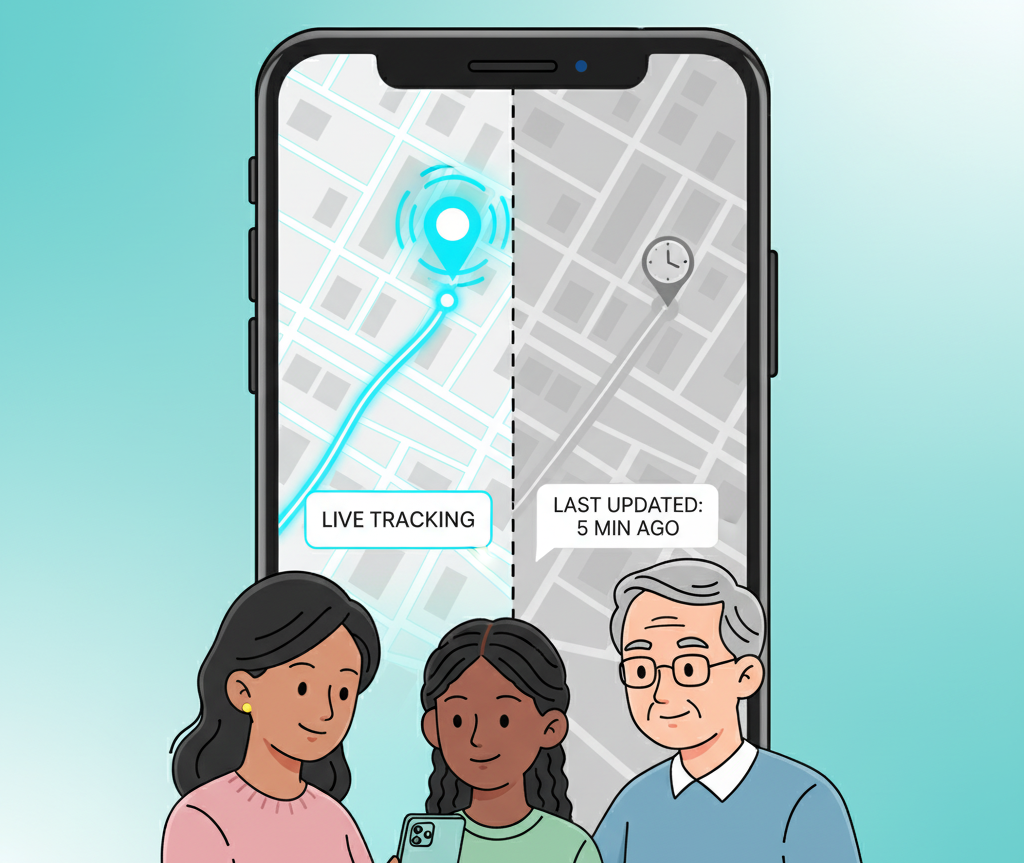
Today’s platforms use intelligent algorithms that balance accuracy with battery life, providing real-time location updates without turning phones into expensive paperweights.
Smart Location Technology Explained
Instead of constant GPS pinging, modern platforms combine:
- Adaptive polling when movement is detected
- Wi-Fi triangulation for indoor accuracy
- Cell tower positioning for background awareness
This hybrid approach means iPhone tracking Android devices happens smoothly without anyone noticing battery depletion.
Beyond Basic Tracking
Raw location data is just the beginning. When your system shows “123 Main Street,” families need to know if that’s a friend’s house or somewhere concerning. Smart platforms learn frequently visited locations and provide meaningful context.
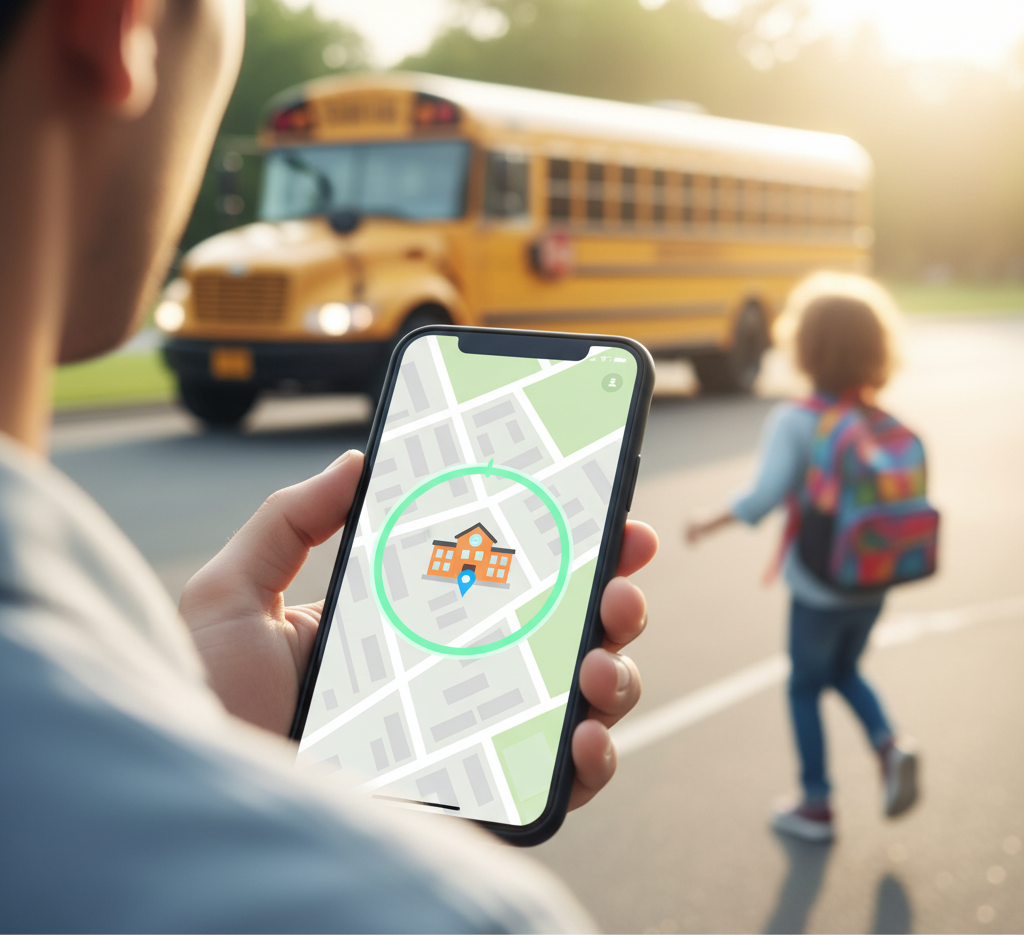
Geofencing takes this further. Set virtual boundaries around school and get notified when your child arrives—no checking required.
Setting Up Your Unified Family System
Creating a cohesive tracking system doesn’t require technical expertise. Choose a platform designed for families, not adapted from business apps.
The Five-Minute Family Setup
Here’s how mixed-device families get connected:
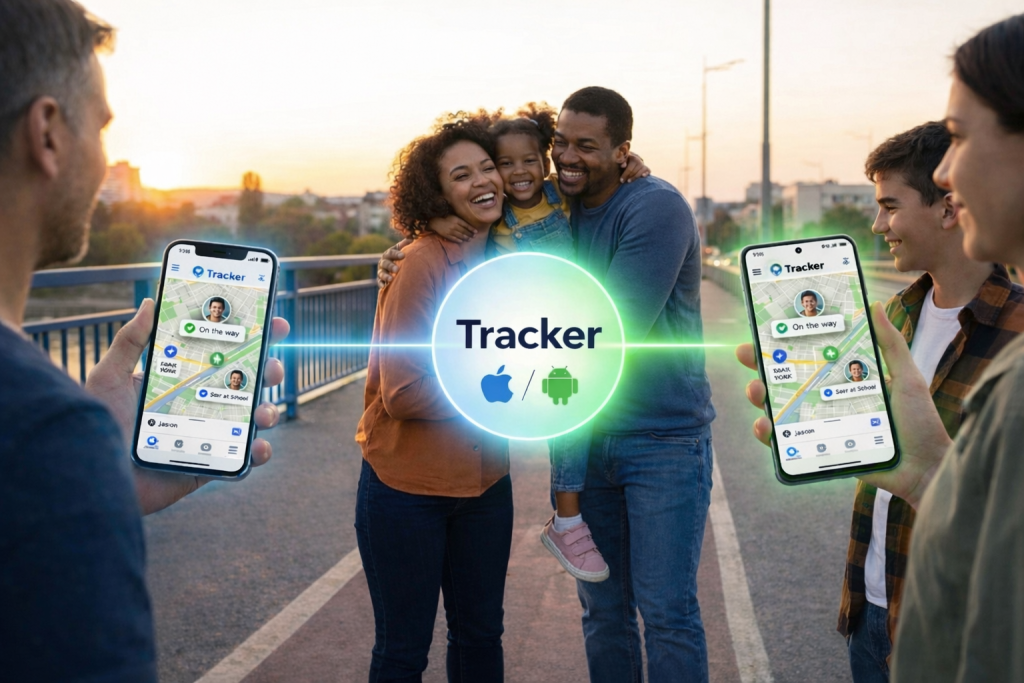
Step 1: Install on All Devices Each family member needs to download app on their device first, whether iPhone or Android. The app works identically on both platforms, ensuring everyone has the same experience.
Step 2: Share Your Unique Codes Tracker uses a simple code-sharing system. Each user gets a unique code in their app. Family members share these codes with each other and grant mutual permission to view locations. No complex group creation needed—just straightforward peer-to-peer connections.
Step 3: Confirm Permissions Once codes are exchanged, each person confirms the tracking permission. This mutual consent approach ensures everyone actively agrees to share their location. You control exactly who sees your location by managing your shared codes.
The Privacy-First Approach
When researching GPS tracker app for Android and iPhone options, privacy should be non-negotiable. Your family’s location data reveals routines, relationships, and vulnerabilities.
What “Secure” Really Means
True security involves:
- Zero-knowledge architecture preventing provider access
- Regular third-party security audits
- Automatic deletion of old location history
Tracker App implements all these measures, making can iPhone track Android scenarios possible without compromising privacy.
Teaching Digital Boundaries
Children old enough for phones are old enough to understand location sharing. Explain it’s about safety, not spying. Set clear expectations about when sharing is required and when privacy is respected.
Making the Switch Today
The Martinez family struggled with incompatible devices for months. After switching to Tracker App, their coordination transformed overnight. Mom receives automatic notifications when Dad leaves work. Their daughter’s location shares only during school hours. The system just works, regardless of who switches platforms.
Your Family’s Safety Transcends Brand Loyalty
The question “can iPhone track Android” shouldn’t determine your family’s safety strategy. Modern technology has solved this problem—you just need solutions built for today, not yesterday.
Tracker App represents the pinnacle of cross-platform family coordination. Unlike free solutions or platform-specific tools, it’s purpose-built for modern families who refuse to let device preferences compromise safety. With genuine battery optimization, meaningful privacy protection, and features designed by parents for parents, it’s the bridge your family needs.
Stop settling for incompatible systems. Your family deserves better than “Sorry, I can’t see your location because you have Android.” Take control of your family’s coordination today.
Ready to unite your family across the digital divide? Experience true GPS tracker app excellence that works flawlessly whether you’re Team iPhone or Team Android. Visit Tracker App now and see why thousands of families have already made the switch to seamless, secure, cross-platform coordination.
Because knowing your loved ones are safe matters infinitely more than the logo on their phone.