Picture this: It is a stormy Tuesday afternoon. You are stuck in a meeting, but a part of your brain is glued to the clock. Your child should have walked through the front door ten minutes ago. You pull out your phone to check their location. The map shows them three blocks away from the house. You breathe a sigh of relief. But wait—the timestamp on that location says “Updated 15 minutes ago.” Suddenly, that relief turns back into a knot of anxiety.
This scenario highlights the critical battleground in modern safety technology: the difference between knowing where someone is right now versus knowing where they were a while ago. Whether you are a protective parent watching over a teenager or a caregiver in the sandwich generation looking out for an elderly parent, choosing the right GPS tracker method is not just about technology; it is about trust and tranquility.
In this comprehensive guide, we will dive deep into the tracking technology comparison between real-time and periodic updates, shattering myths about battery life and helping you decide which solution truly keeps your loved ones safe.
Understanding the Core Mechanics of Location Tracking
To make an informed decision, we first need to strip away the jargon and understand how your phone talks to the satellites above.
What Does “Real-Time” Actually Mean?
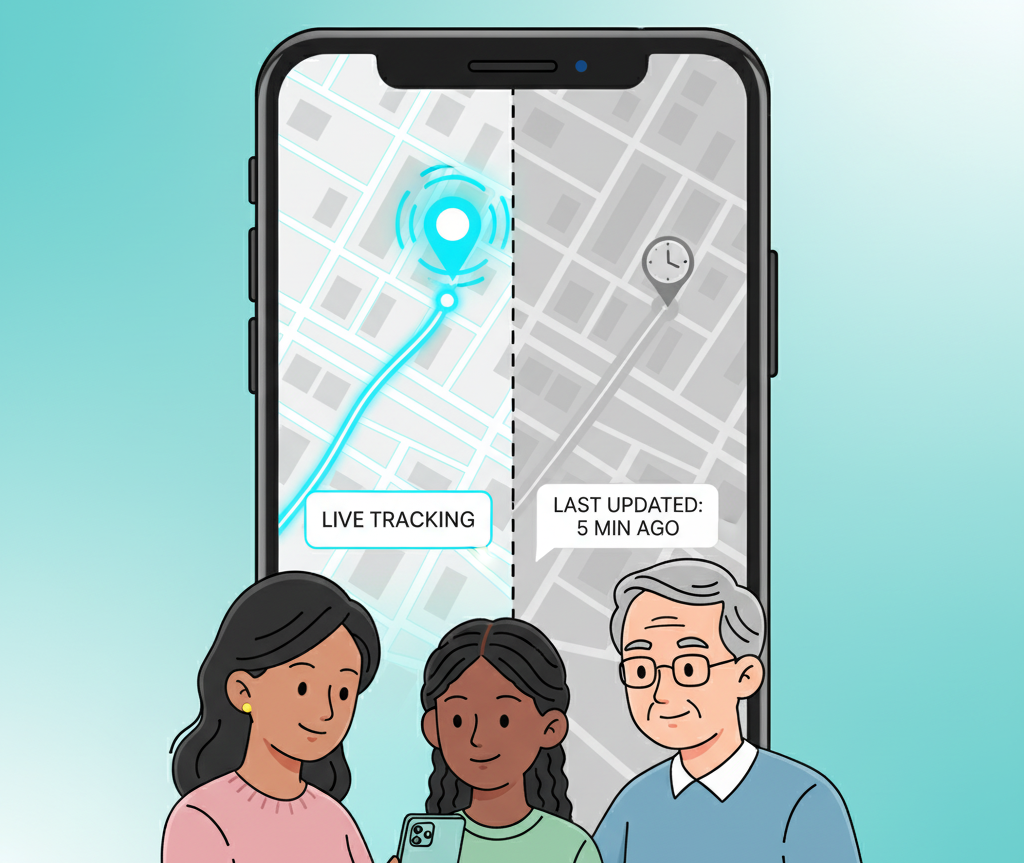
When we talk about a real time GPS tracker, we are referring to a system that maintains a continuous handshake with GPS satellites. As the device moves, it instantly calculates its new coordinates and transmits them to your screen. This creates a fluid, moving dot on your map that mirrors the person’s actual movements as they happen.
Think of it like a live video stream. You are seeing the action unfold as it occurs. This is crucial for real-time GPS tracking, especially in dynamic situations like navigating through a crowded festival or ensuring a family member has safely boarded a bus. There is virtually no lag between the physical movement and the digital update.
The Logic Behind Periodic Updates
On the other side of the spectrum, we have periodic updates. This method relies on a “ping” interval. The device might wake up every 5, 15, or even 30 minutes to say, “I am here,” and then go back to sleep.
Historically, this was the standard. Why? Because older GPS chips were power-hungry beasts. Developers had to space out the GPS update frequency to prevent the phone from dying by lunchtime. While this method gives you a general idea of someone’s whereabouts, it creates “blind spots.” A lot can happen in the 15 minutes between pings.
The Critical Gap: Why Seconds Matter
For a track GPS phone solution to be truly effective in a safety context, the gap between reality and the data on your screen needs to be minimal. If your elderly father with memory issues takes a wrong turn, a periodic tracker might not alert you until he is miles away. A real-time system allows you to see the deviation instantly and act immediately.
The Great Battery Myth: Does Accuracy Cost Power?
For years, users have been forced to make a difficult choice: Do I want high accuracy, or do I want my battery to last the whole day? This trade-off has been the biggest hurdle in the adoption of real-time location tracking.
The Traditional Drain of Continuous GPS
It is true that constantly querying satellites and transmitting data over cellular networks is energy-intensive. In the early days of smartphone apps, leaving a GPS app running in the background was a surefire way to turn your phone into a pocket warmer and drain the battery in a few hours. This led many developers to stick with periodic updates as a necessary evil.
How Modern Optimization Changes the Game
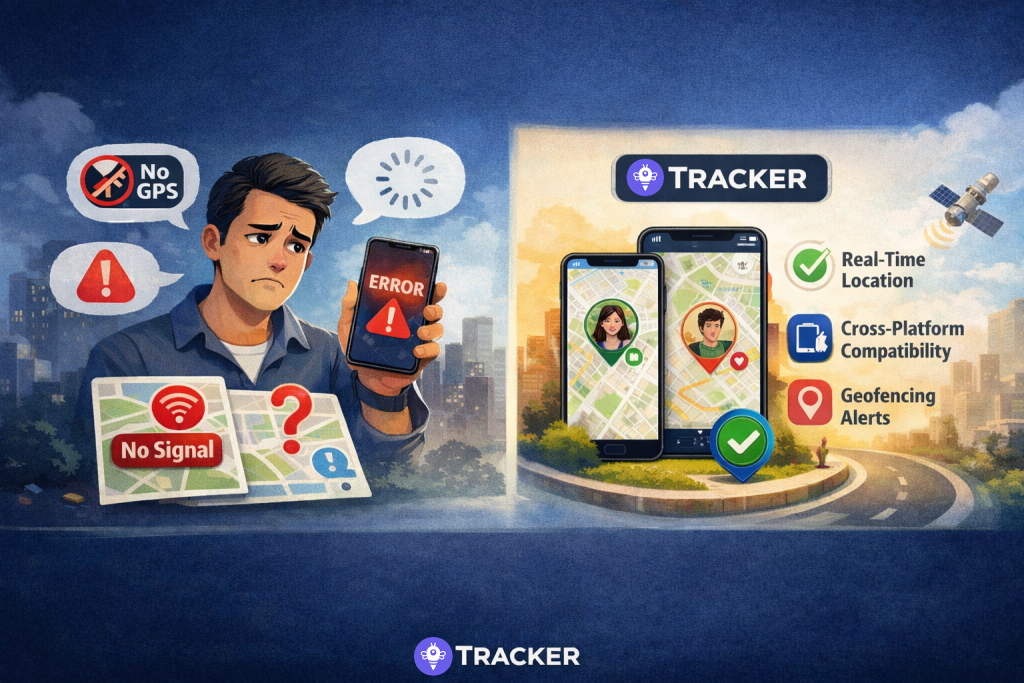
However, technology has leaped forward. We have entered an era of intelligent background processing. This is where advanced solutions like Tracker shine. Instead of brute-forcing the GPS connection, modern apps use smart algorithms to determine when an update is necessary.
For example, if the device detects that the user is sitting still (like at a desk or in a classroom), it intelligently throttles down the data usage. The moment movement is detected, it ramps back up to precision tracking. Tracker App has mastered this balance, delivering precise, continuous updates while keeping battery usage incredibly low. You no longer have to sacrifice your phone’s lifespan for the safety of your family.
Privacy and Data: Who Owns Your Movement History?
When we discuss tracking, we must discuss privacy. The more frequent the updates, the more data is generated about a person’s daily life.
The Risk of Cloud-Based Periodic Storage
Many apps that use periodic tracking upload all those data points to a central cloud server. While this allows you to access history from a web browser, it also means your loved one’s location history is sitting on a computer owned by a corporation. In an age of data breaches, this is a valid concern for the privacy-conscious user.
The Security of On-Device Storage
This is another area where Tracker differentiates itself significantly. Prioritizing your privacy, Tracker ensures that location history is stored securely on your own device, not uploaded to a vulnerable cloud database.
This means your data belongs to you. You get the benefits of live location updates without the worry that a third party is mining your movement patterns for advertising data. It is a closed loop between you and the people you trust—exactly how a family safety tool should function.
Scenarios: When Real-Time is the Only Option
To truly understand why real-time tracking usually wins the debate, we need to look at the daily lives of the people who rely on these tools.
The “Protective Parent” and the Walk Home
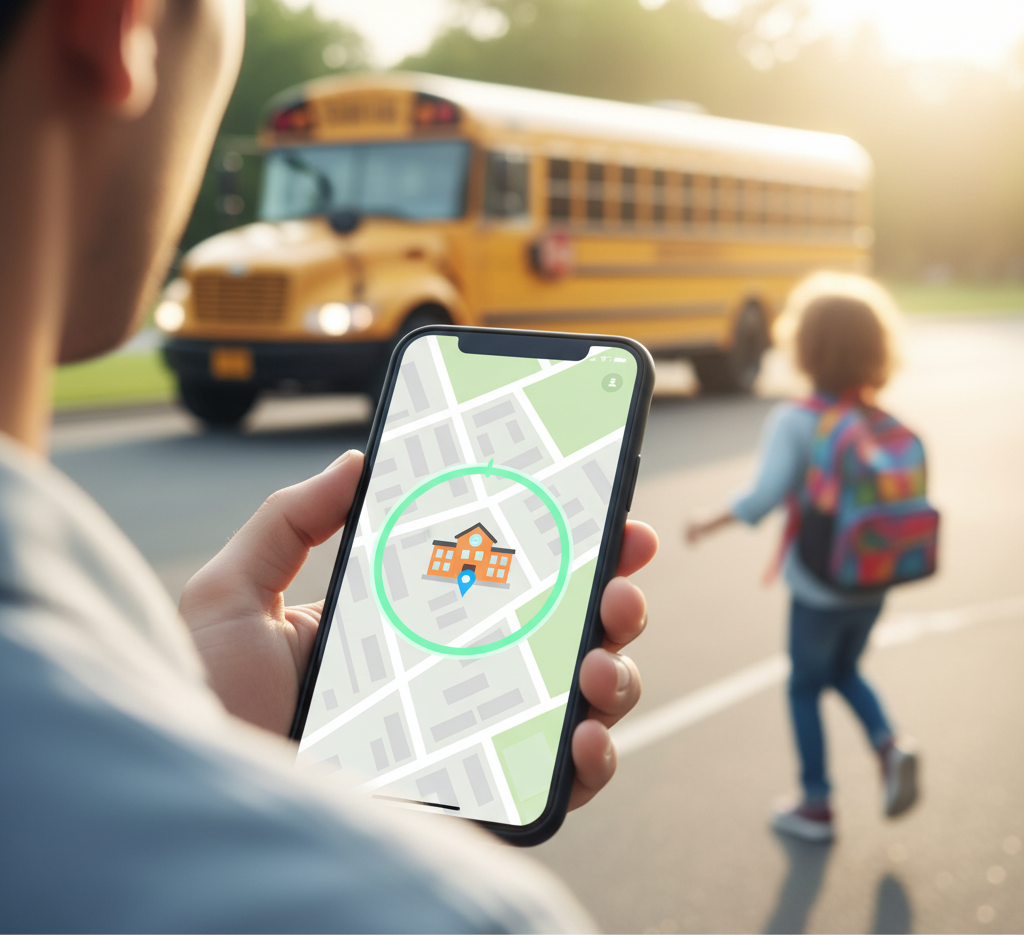
Imagine your child walks home from school. It is a short, 15-minute journey.
- Periodic: The tracker updates when they leave school. The next update is scheduled for 15 minutes later. By the time you get that second ping, they should be home. If they aren’t, you have zero information on where the delay happened.
- Real-Time: You can glance at the app and see them turn the corner. You see them stop briefly at the convenience store (okay, they are buying a snack). You see them moving again. The anxiety is neutralized by information.
The “Sandwich Generation” and Wandering Risks
Caring for parents with dementia or Alzheimer’s is incredibly stressful. Wandering can happen in the blink of an eye.
- Periodic: A 10-minute delay in location updates can mean your parent has boarded a bus or entered a busy intersection.
- Real-Time: Tracker with GPS capabilities allows you to set up geofencing alerts. The moment they cross a safe boundary, you know, and you can see exactly which direction they are heading.
The “Digital Native” and Social Safety
Teenagers and young adults value independence, but they also look out for each other. Whether it is meeting up at a concert or ensuring a friend gets home safely after a late-night party, they need instant data.
- Periodic: “It says she’s still at the club?” “No, that was 20 minutes ago.” Confusion reigns.
- Real-Time: The friend group stays connected effortlessly. The app interface is clean, intuitive, and fast—perfect for users who have no patience for clunky tech.
Why Simplicity is the Ultimate Feature
We have talked about frequency and battery, but usability is the unsung hero of effective tracking.
The Friction of Registration
Most apps require you to sign up, verify emails, create passwords, and convince your family members to do the same. This friction often stops people from using safety apps altogether. Tracker disrupts this model with its “instant-use” philosophy.
There is no registration required. You do not need to hand over your email address or phone number. You simply download the app and share a secure link or code. This is particularly vital for families who want to get set up quickly without a tech support session at the dinner table.
Cross-Platform Harmony
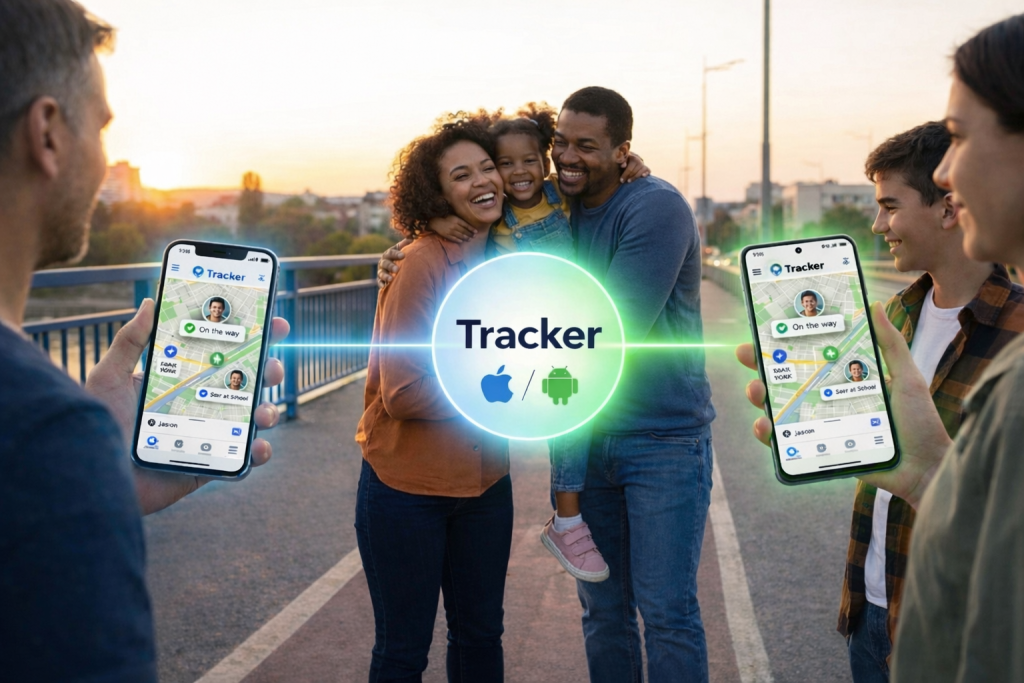
Families are rarely exclusively Apple or exclusively Android. You might have an iPhone, while your teenager loves their Samsung. A superior Tracker app must bridge this divide seamlessly. Tracker delivers identical, high-performance tracking across both iOS and Android devices, ensuring that no family member is left off the map due to their choice of phone.
Making the Right Choice for Your Family
So, which tracking method works better? While periodic updates served a purpose in the past, the demands of modern life and the advancements in technology clearly favor real-time solutions—provided they are engineered correctly.
The Checklist for a Superior Tracker
When selecting a tool to keep your family connected, look for these three pillars:
- Precision: Does it offer live location updates rather than delayed snapshots?
- Efficiency: Does it run in the background without killing the battery?
- Privacy: Does it keep your data in your hands, rather than on a cloud server?
Why Tracker Stands Out
Tracker App checks every single one of these boxes. It combines the peace of mind of real-time visibility with an intelligent energy-saving engine that respects your device’s hardware. It removes the barriers of complicated sign-ups and invasive data collection, offering a pure, focused experience.
Whether you are a parent waiting for that “I’m home” notification, or a friend ensuring the squad stays together, you deserve a tool that works as fast as life happens.
Take Control of Your Peace of Mind Today
Do not leave your family’s safety to chance or outdated technology. Experience the difference of a truly modern, privacy-focused, and battery-efficient solution.
Download Tracker App now on iOS or Android. It is free to start, requires no registration, and gets you connected in seconds. Join the community of proactive families who value safety without compromise. Let Tracker be the silent guardian in your pocket, keeping you close to the people who matter most.